Introduction
With the help of other important stakeholders who also provide time, money, and expertise, a business partnership may represent a fantastic approach to launching a business in the US. Business partnerships come in a variety of forms, so you may choose the best one for your particular requirements with ease. For tax purposes, your business and private finances may be treated as one since you are a partnership. This is a straightforward arrangement, but it is risky.
This guide examines how to establish a business partnership in the United States and discusses some of the benefits and drawbacks of business partnerships.
Types of business structures
Entrepreneurs must comprehend the various business structure options available to them. They can select the one that best suits their unique requirements & goals.
In the US, the most prevalent types of businesses are:
- Limited liability company (LLC)
- Corporation
- S Corporation
- Partnership
- Sole proprietorship
Each alternative has unique characteristics and advantages, but most significantly, it may result in various legal and tax responsibilities for the owner. This post is for you if you’re considering a partnership; we’ll address the important inquiry: What is a business partnership? We’ll also examine why and how to create one.
Definition of a Business Partnership
Many aspiring entrepreneurs want to understand what a partnership in a business is. First, let’s review the Internal Revenue Service’s description of a business partnership.
A partnership is a business or trading connection between two or more individuals. Each person shares in the company’s gains and losses and contributes cash, assets, labor, or expertise.
Throughout this lesson, we will examine a variety of different kinds of partnerships. Nonetheless, a partnership may have the following essential qualities:
- A partnership is a company that is held by two or more individuals; in the US, many partnership structures are typically utilized.
- Every business partner is expected to make contributions to the company, such as time or money.
- The parties’ agreement should be governed by an oral or written business partnership agreement.
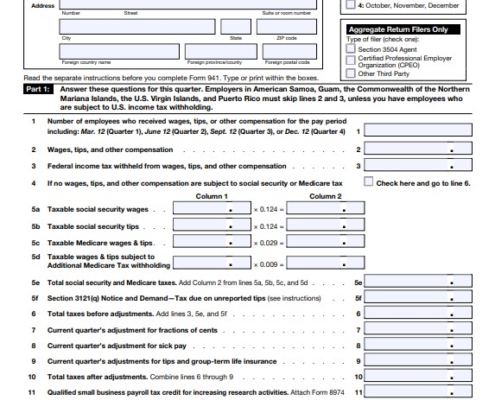
- Partnerships are required to submit reports of income to the IRS, but they are not required to pay business income tax.
- In their individual tax returns, partners are required to disclose their own business gains and losses. We refer to this as pass-through taxation.
Business Partnership Types
Now you know what a partnership in a business is. Although the definition of a partnership in the business world is quite simple, there are various sorts of partnerships, so you may need to consider your options before choosing one. This is a summary of the most popular forms of commercial partnerships in the United States.
1. GP or general partnership
When two or more people decide to collaborate, a general partnership is created; the specifics of the collaboration are outlined in a partnership contract. Each partner remains equally responsible for any liabilities or legal issues pertaining to the firm and has the right to an equal portion of any profits made. This means that all participants share the rewards and risks of the business equally.
Important Points:
- Each partner has an equal amount of financial and legal risk.
- Partners should split profits evenly.
- The terms of the partnership, such as a profit-sharing arrangement and an ejection clause, should be outlined in a formal agreement.
- The UPA (Uniform Partnership Act) establishes the framework for partnership creation and dissolution in numerous US states.
2. Limited Partnership (LP)
A minimum of one general partner and a minimum of one silent partner make up a limited partnership. The general partner/partners assume complete legal & financial responsibility for the company. Silent partners have less involvement in the company and are only liable for the first investment. This implies that if the company accrues debt, the general partner will be responsible for any expenses above the initial investment, and they could only lose the sum that they invested.
Important Points:
- There must be a minimum of one silent partner and one general partner.
- General partners assume complete financial and legal accountability for the company.
- The liability of silent partners is limited to the amount of their initial contribution.
- Depending on the state you live in, silent partners might not be eligible for pass-through taxation. Some states additionally provide a variation of this type called the LLLP (Limited Liability Limited Partnership). Although this business form is not always available or recognized, the general partner could be eligible for some restricted responsibility in this situation.
3. LLPs, or limited liability partnerships
Each partner’s liability is restricted in a limited liability partnership. The other partners aren’t automatically held accountable if one member accrues debt or encounters legal problems. Professionals who collaborate often use this type of partnership. It shields the group from the conduct of any one partner.
Important Points:
- To shield them from problems brought on by other partners, each partner’s liability is restricted.
- Professionals who work in partnerships and are each in charge of discrete projects or clients frequently employ
- Not all states allow LLPs. In those that do, the UPA offers guidelines for LLPs, including provisions to keep the partnership from dissolving in the case that one member departs.
Benefits of Business Partnerships
Let’s examine a few benefits of business partnerships that may be significant if you choose this form of business structure for your endeavor:
- Because each partner contributes equity, experience, or time, starting a business is made easier.
- Different abilities can be combined in partnerships to produce a successful firm.
- A comparatively simple business structure that is inexpensive to establish
- Easy format for reporting and taxation
- Limiting one or more partners’ liability is an option that can motivate investors
- Numerous partnership types can accommodate a variety of situations.
Must Read: How To Find a business partner who will boost your business
Business Partnerships’ Drawbacks
It’s not all positive news, of course. Not everyone is a good fit for business collaborations. Before you embark on your entrepreneurial path, it is advisable to consider the following drawbacks of business partnerships:
- Certain partners may be subject to limitless liability for commercial debts or legal matters.
- Compared to alternative company structure options, tax rates could be higher.
- To outline how you want to collaborate, you will need to prepare a comprehensive business partnership agreement.
- Partners may disagree on commercial matters, which could lead to conflict.
- If one partner departs, the company might need to dissolve.
Forming a Business Partnership
In the US, business partnerships are among the most prevalent entity kinds, especially among more recent entrepreneurs. State-by-state variations may occur in the precise procedure for establishing a corporate partnership, and regional variations may also affect the management of partnership agreements.
The procedure of creating a business partnership and registering it is typically not too complicated, though you will need to be aware of the specifics of partnership agreements in your particular area. Let’s go over the fundamental actions you must take.
1. Select a Type of Partnership
Different forms of partnerships work well in different situations. General partnerships, limited partnerships, & limited liability partnerships are options you should think about.
While any of the above three might work for you, some are more typical in particular situations. If you’re starting a firm with a few investors who don’t want to be part of day-to-day operations, a limited partnership may be appealing. A limited liability partnership could represent a good option if you work in a field where one partner may face individual lawsuits or collect individual debts. An entrepreneur’s success may depend on understanding what a partnership in a business is.
2. Write a Partnership Contract
Legally, partnership agreements can be made orally or in writing. Having a formal agreement is recommended. This also reduces the possibility of future misunderstandings or disputes.
You will have to draft a partnership agreement when you first form a partnership. You can later modify as necessary. Adjustments made following the end of a particular tax year have to be approved before the date of your tax filing, according to certain regulations.
Depending on the kind of firm you’re starting, your partnership agreement may need to contain different details. Nonetheless, you will always need to provide specific business details, such as the registered trading name, plus the total amount of funding or other assets that each partner is contributing. Information on the share of profits must also be included in your partnership agreement.
It makes sense to discuss conflict resolution and what would occur if one partner decided to leave the company in order to prevent problems later on.
Local legislation in the state where you are registered will be interpreted as the agreement reached if the partnership does not address a particular subject.
3. Partnership Registration
The partnership must be registered with the Secretary of State online in the state/states where you plan to conduct business.
Your selected partnership name has to be available. It must conform to any local firm name regulations before filing. Online resources with thorough explanations and tools to help you through the procedure are available to verify the availability of names and then register your partnership. This implies that, if you’d like, you may file your partnership on your own without consulting an agent, though business formation specialists are nevertheless available to assist you if necessary.
After registering your partnership, you will also need to complete other legal & tax-related formalities, like opening a company account with the bank or similar non-bank service provider, obtaining a tax ID number, and obtaining any permissions required by your particular field of work.
Agreement for Business Partnership
Although a written contract of partnership is not legally required for commercial partnerships, it is highly recommended. In theory, your agreement can be expressed verbally, but this is far more likely to result in miscommunications or arguments. Local legislation will be the ultimate arbiter in any dispute if there is no arrangement in place or if your contract is not full. You must understand what a partnership in a business is before signing a partnership agreement.
Business partnership agreements might contain a wide range of conditions depending on your needs and the type of business. Almost always, you’ll need to give some details.
- Information about the partnership: What kind of business partnership structure have you chosen? Which state are you filing in?
- Business Details: Information about the company, including the name of your partnership, its goal, and, if predetermined, its duration
- Partners Details: Information on each partner, including their roles, contributions, and personal details
- Financial details: Details regarding earnings and any losses, including profit-sharing arrangements, and what will happen if there are losses
- Dispute resolution: what to do when partners disagree
- Dissolution: What happens in the event that one partner departs? What happens if all partners decide to sell or end the partnership?
An effective company partnership is built on a comprehensive & well-defined partnership agreement. It is worthwhile to take the time to design one that all partners can agree upon.
Conclusion
A business held by two or more individuals is called a partnership. General partnerships, limited partnerships, & limited liability partnerships are the most popular types of business partnerships. Partnerships are appealing. They offer the chance to combine resources, knowledge, funds, and talents to start a firm. This can make it much simpler to launch a successful project than going it alone. But there are drawbacks as well, such as the possibility of conflict or disagreement.
A key feature of partnerships is that, although they are required to submit revenue reports to the IRS, partnerships don’t pay business income tax. Rather, partners profit from pass-through taxes, which allows them to report corporate profits and losses on their individual tax returns.
Although the process can vary slightly from state to state, registering a partnership is typically one of the easier ways to launch your company. To begin your investigation and determine how to move forward with the new company alliance, use this guide.
FAQs
1. What distinguishes a partnership from a US LLC?
A partnership is not the same as a Limited Liability Company. LLCs are regarded by their owners as independent entities. There is a clear separation between the business’s financial and legal transactions and those of its owners. While there are partnership types that can provide some liability limitation, partners and the companies they own are viewed as one and the same in a partnership.
2. What distinguishes a partnership from a limited company?
The main distinction between a company & a partnership is that with a company, the business and its owner are regarded as distinct legal and financial entities. This distinction is less obvious in a partnership since partners may receive pass-through taxation on earnings and typically assume all or a portion of the legal and financial risk of their company.
3. What distinguishes a partnership from an LLP?
In contrast to a GP (general partnership), an LLP (limited liability partnership) often does not hold its participants responsible for mistakes or problems caused by another partner. For instance, if one partner in an LLP is sued for misconduct, the other partners wouldn’t be held accountable. Professional firms like those of doctors, accountants, lawyers, and architects frequently use this model.