Introduction
New owners of small enterprises are often perplexed by the topic of how to pay themselves in an LLC.
You have a few choices when it comes to getting paid. Each has distinct tax ramifications and is dependent on your company’s structure.
An owner’s draw, which gives you a portion of your LLC’s profits as a salary, is often how you pay yourself from an LLC.
If you decide to be treated as a corporation, the laws are different since owners must abide by IRS standards if they work as employees, accept a salary, and get a dividend (similar to a bonus).
Still not sure? Don’t worry, everyone is initially! In this piece, we’ll go over all the information you need to pay yourself in an LLC.
Let’s now explore your choices and choose which one works best for you.
A Brief LLC Overview
The greatest features of both corporations and sole proprietorships are combined in an LLC (limited liability company), a hybrid company structure.
Creating an LLC gives you the streamlined tax structure of a sole proprietorship or partnership, along with the limited liability safeguarding of a corporation. It depends on the number of owners.
An LLC is also known as a flow-through or pass-through entity. It is recognized by the IRS (Internal Revenue Service) as a disregarded entity. This implies that you pay taxes on your own and declare your company’s gains and losses on your individual income tax return.
You are regarded as an employee, are eligible for a salary, & both you and the company pay taxes, except if you want to establish your company as a corporate limited liability company for tax purposes.
Additionally, the tax obligations are similar even though state regulations pertaining to LLCs differ.
LLCs come in the following types:
1. LLC with just one member
It’s the simplest and least expensive way to create an LLC, and it’s treated by the IRS like a sole proprietorship.
2. LLC with many members
Unless otherwise asked, the IRS treats an LLC with more than one member as a partnership. Taxes and debts are divided among several partners.
3. Corporate LLC
An LLC has the option of filing taxes as an S or C corporation. You must submit a formal application to the IRS to accomplish this.
Must Read: Sole Proprietorship vs LLC: Key Differences and Considerations
How to Make Your Own Payments Using an LLC
Owners of LLCs with one or more members pay themselves via taking what is referred to as an owner’s draw.
As employees of a corporation LLC, shareholders receive a salary. An additional dividend payment is given if profits permit.
Naturally, there is a bit more to it.
1. Single-member LLC
Since an LLC with just one member is a pass-through legal entity, all of its gains and losses go straight to you. As a result, you are unable to accept a traditional salary and must instead take money from your company, which is referred to as an owner’s draw.
An owner’s draw gives you a wage based on a portion of your LLC’s earnings.
A payment in cash or a non-cash item, like a business computer or vehicle, might be used as an owner’s draw. You are in charge of how often and how much you pay yourself from an LLC.
How your owner’s draw is taxed
You file an IRS Form 1040 (Schedule C) with your individual tax return to detail your earnings and losses. Don’t worry, the form is correct even though it states sole proprietor.
Always keep in mind that you owe income tax on each of your LLC earnings, even if you don’t take them out of your business, when you file your taxes.
You have to pay taxes on self-employment on the sum you earn throughout the tax year, in addition to state, local, and federal taxes.
Your taxes on Medicare and Social Security are covered by the 15.3% self-employment tax.
You use Schedule SE (Form 1040-SR or 1040) to calculate the amount you pay them (quarterly).
Use Form 1040-ES to file projected tax payments. You may also use the EFTPS (Electronic Federal Tax Payment System) or IRS Direct Pay to do it online.
2. Multi-member LLC
The owners of a multi-member LLC have the option to be taxed as a corporation and alter their compensation, even if the IRS views them as a partnership & pass-through business.
This is how both choices operate:
Option 1: As a partnership
Members of partnerships pay themselves via taking an owner’s draw because they are also pass-through entities.
For tax filing reasons, a partnership must use the return of partnership income (Form 1065) for declaring its income, losses, profits, deductions, and credits.
A partnership “passes through” any gains or losses to its partners rather than paying taxes on its revenue. Partners’ tax or information filings must include partnership-related items.
Members of the LLC partnership then receive an IRS Schedule K-1 each year, which they use to submit their individual tax returns and declare their income share.
Additionally, members use the Schedule SE form to pay taxes on self-employment on their portion of the drawn profits.
Additionally, partners are required to shell out income tax on the full percentage share, whether or not they receive it as a wage, just like in a single-member LLC.
How partnership payments operate
Each partner has a capital account, which is a percentage portion. Their pay is commensurate with their ownership stake.
For instance, each of the four members of your partnership owns 25% of the business. Each member can withdraw $25,000 from the LLC’s $100,000 yearly profit.
Receiving a guaranteed payment is an additional method of compensating oneself in an LLC partnership.
Option 2: Guaranteed payment
The company may also guarantee payments to its partners. However, a guaranteed payout is a company expense used to recompense all the partners for the time and other services, in contrast to an owner’s draw, which pays members for the owned proportion.
How guaranteed payments operate
We will take the previously described example. One partner (Mike) is now working more hours & needs more pay.
The LLC makes a $120k profit at the end of the year. Each partner owns an equal portion.
Each of the four partners receives a $25,000 owner’s draw over the course of the year. It leaves twenty thousand dollars in the company.
To make up for the additional hours Mike put in, they established a guaranteed payout of $1,000 each month over a period of twelve months.
Mike receives an additional $12,000 in addition to the $25,000 that each of the four partners receives for their owner’s share. Additionally, the LLC still has $8,000 in its bank account for operating expenses.
How to notify the IRS of guaranteed payments
A partner’s guaranteed payments are documented on their Schedule K-1. Add these, together with any owner’s draw they may have received, to Schedule E tax form 1040.
3. Corporate LLC
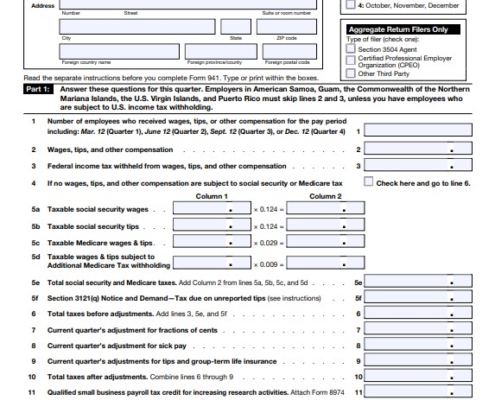
For the purpose of taxation only, an LLC may decide to be recognized as a corporation by filing Form 8832, Entity Classification Election.
Because they are employees, members of C and S corporations are unable to pay themselves by accepting a guaranteed payment or an owner’s draw. Rather, they are paid a salary and get dividends equal to a proportion of the LLC’s income.
Similar to a guaranteed payout, a dividend is subject to specific IRS limitations.
Because dividends are not subject to payroll tax, they are highly appealing to shareholders. Therefore, you will pay less in taxes the more profits you receive.
Remember that the percentage of dividends and salaries that shareholders get is closely monitored by the IRS.
How taxes are paid by S and C corporations
An LLC stays an LLC for all legal purposes, with the exception of taxes, even if it wishes to turn into a corporation.
S corporation
One type of pass-through entity is an S corporation. In other words, profits and losses are transferred from the corporation to the business owners, who then pay taxes on their individual tax returns.
FICA (Social Security & Medicare taxes) is deducted from members’ wages.
However, members who earn dividends or distributions save a lot of money on payroll taxes since they do not have to pay Social Security & Medicare.
Submit Form 2553 to the IRS to sign up for S corporation tax status.
IRS Form 1120S is used by S corporations to report their activities.
C Corporation
Members of C corporations contribute income tax on the dividends and salary in addition to paying income tax under the corporate rate of tax, which results in double taxation.
Payroll and income taxes are deducted from their earnings since they work for their company.
Dividends are also free from payroll taxes, much like an S corporation.
By submitting IRS Form 8832, you request to be treated as a C corporation.
The company uses Form 1120 to file year-end taxes.
How Much Should You Pay Yourself?
You must determine the amount to pay yourself from an LLC.
When they first start out, most LLC owners take a salary that covers their basic expenses while leaving enough profit in the company to finance future growth.
According to the IRS, this is “fair remuneration.” It’s a common technique that functions as follows:
1. LLC operating expenses
Estimate the yearly operating expenses of your LLC first. Add all of your existing debts and creditors, together with the necessary reinvestment for yearly growth. And if your current cash flow stops, you might even have a rainy-day stash.
The amount you determine is what your company needs to make before you are paid.
2. Your minimum salary
Add all of your personal yearly expenses to the operating costs of your LLC. You are now aware of what your company needs to make to pay you the minimum wage.
3. Appropriate compensation
You can raise your compensation if the yearly revenues of your LLC exceed the minimum wage and operating expenses.
If you’re receiving a guaranteed payment or owner’s draw, it’s simple since the extra money will appear on your end-of-year personal tax return.
However, you have to be responsible for what the IRS refers to as reasonable compensation if you’re an S or C Corporation receiving a paycheck and a dividend.
Example: Your four-member company makes $400,000 a year. Each of the four workers receives a $10,000 salary & rest in dividends.
In this case, the IRS may file an action against your company and ask that the dividend be lowered and the pay be raised. You will ultimately be responsible for additional taxes, penalties, and late fees.
However, what does “fair remuneration” mean according to the IRS?
What constitutes a fair salary?
“The amount that similar businesses would typically pay for similar services under similar conditions” is how the IRS determines reasonable remuneration.
By looking up government earnings data, you may determine the responses to those three elements (value, services, and conditions).
To find out how much to compensate yourself as a salary or in dividends, look at online resources like Glassdoor that offer industry average salaries.
Naturally, the more dividends you get, the better, right?
However, you’ll need the assistance of a skilled tax accountant to find the ideal balance to make sure you remain out of trouble with the IRS.
How to Prevent Tax Mistakes During Payments
Taxes are quite intricate. Business owners occasionally make (often expensive) mistakes as a result of this intricacy.
Hiring an experienced tax accountant who is knowledgeable about county, state, & federal tax rules is your best option.
You may lower your tax burden, take advantage of legitimate tax deductions, and make sure your LLC conforms with tax regulations with the assistance of a qualified accountant.
Despite all of this, LLC owners continue to make mistakes. These are the top three:
1. Not putting money aside for self-employment or potential income taxes
An end-of-year income tax payment and projected quarterly self-employment income tax payments are required of all LLC owners (apart from those subject to corporation tax).
The IRS may impose a penalty if you don’t make enough payments, don’t set aside enough money to cover any shortfall, or make late payments.
Additionally, use Form 1040-ES to make anticipated quarterly payments prior to the due date and attempt to save in excess of your taxes in your business account.
You can always receive a tax refund within a standard 21 days of completing your return if you overspend.
2. Failing to maintain payroll documentation
My accountant provided me a ring file with multiple colored parts and the following guidance when I first created my LLC.
Maintain a paper record at all times. Keep track of all invoices, bank statements, tax returns, and receipts, no matter how tiny. In the long term, it will save you money.
Although his advice may seem a bit excessive, he was correct.
In addition to my bank account balance, state and federal regulations mandate that an LLC maintain accounting records.
To maintain a clear separation between personal and commercial banking, your account must also display each draw and paycheck you receive.
Because if they fail to do so and you are sued, a judge may “pierce the corporate veil,” or remove the limited liability coverage, and hold you accountable (under different conditions).
3. Paying workers and subcontractors
Never provide cash to contractors, employees, or yourself. Use a check or bank transfer to process all transactions through your business account. In the event that you are ever audited, you will have a paper trail.
Additionally, as previously said, automate and document each transaction using a payroll software system.
In contrast to a full-time employee, you may employ yourself as a freelancer, avoid paying employment taxes, and just pay for services when your company requires them.
If you want to hire yourself in a multi-member/corporate LLC, submit your IRS Form W-9 to your LLC, which will subsequently submit IRS Form 1099-MISC.
The amount that your LLC compensated you as a contractor must also be included in your individual income tax return and subject to self-employment tax.