Introduction
When you’re running a small or mid-sized business, money is always tight. Every expense has to earn its place, and big advertising budgets usually don’t make the cut. Most owners simply don’t have thousands to throw at ads and hope something sticks.
The challenge is advertising a business without burning cash.
You don’t need a huge budget to get attention. There are simple, legitimate ways to show up where your customers already are and start building familiarity over time. Nothing shady or expensive. Small efforts can snowball when you stay consistent.
Advertising a Business: Top Ideas
Going up against big corporations can feel like a losing battle when they have massive marketing departments and even bigger budgets. But honestly? You don’t need a Fortune 500 bank account to get noticed. You can have a big impact without going over budget. Many small business owners are currently demonstrating that.
The trick is realizing that you don’t have to do everything. You don’t need every tactic under the sun for advertising a business. Some strategies will be a perfect fit for your style. Others will just be a waste of time. Look at what’s actually working for businesses like yours.
Then choose the ideas that fit what you’re trying to achieve. The ones you can stick with.
It’s more important to use what makes sense for your business than to pursue strategies. Following a corporate playbook may not work for you.
1. Make a Google Business Profile & Verify It
Remember the last time you needed a plumber or were craving a good sandwich. You probably typed “near me” into the search bar of your phone. That map that pops up? That’s where you need to be. If you haven’t set up a Google Business Profile, you’re basically invisible to anyone who doesn’t already know your name.
It’s not just about being a dot on a map, though. When someone types in your business name, you want that professional box to show up on the side of the screen with your photos, your hours, and—most importantly—your reviews.
Here’s the deal:
- It’s free. Google isn’t charging you for this, so there is no excuse to skip it.
- Verify it. Google needs to know you’re the actual owner. Usually, they’ll send you a postcard or a text. Do not ignore this step. You don’t show up in the “Local Pack” if you are not verified (those top three results everyone clicks on).
- Keep it real. Make sure your phone number and hours are actually right. There’s nothing that kills a customer’s mood faster than driving to a shop that says “Open” online but has a “Closed” sign on the door.
Why bother? Because it works 24/7. Even when you’re asleep, your profile is out there acting like a digital storefront, telling people exactly where you are and what you do. It makes advertising a business easy.
2. Create your Website
This sounds obvious, but a lot of small businesses still skip it. Don’t. A website is often the first place people land when you are advertising a business online. They might first hear about you on Google, Instagram, or from a friend. But they’ll open your site before they call or buy.
Your website doesn’t need to be too fancy. It just needs to make sense. What do you do? Who is it for? How can someone reach you? That’s it. Clear pages and simple navigation. No guessing.
This is also where you tell your story. Not a sales pitch—just the basics. How did you start? What you offer. People like knowing there’s a real business behind the name.
Use the site to show why someone should choose you instead of the next option in the search results. Add your phone number, your email, & your location. If you have reviews, put them there. Let visitors hear from actual customers, not just you.
Don’t build it once and forget about it. Update it and add new info. Link it to your social media pages so everything feels connected.
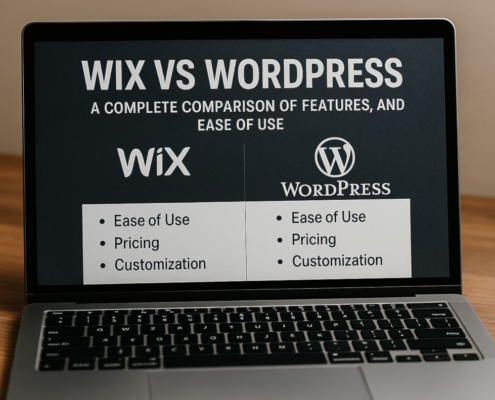
If money is tight, start with what’s free. There are basic website builders and templates that get the job done. They’re not perfect, but they work. You can upgrade to a paid site and customize it properly when the business grows, and you have room in the budget. What matters most is being online. Being easy to understand when people find you.
3. Have a Blog
Blogs aren’t old news. They still work. For small businesses, a blog can actually help people find you and get them interested in what you do. The key is putting out useful content—stuff people actually want to read.
You can sprinkle in the words people search for online. The more you do that, the better chance you have of showing up on Google when someone looks for your services. It’s not instant, but it works over time.
What do you write about? There are tons of options. Customer stories are great. Quick videos can work too. How-to guides & case studies can be useful. Answer common questions your clients have. You can do a series of posts that solve everyday problems people face.
The point is simple: give people something helpful. There is a good chance that they’ll start coming back. Your blog can pull in new visitors. You can build trust and even help your sales without spending a dime.
4. Be Active On Social Media & Reward Your Followers
A website is good. But social media? That’s where people see you. Pick the platforms that are relevant to your business. Post updates. Sometimes news, sometimes promos, or sometimes just what’s happening in the office. Keep it current and real.
And don’t just post. Reward your followers. Giving a small discount or a freebie can make them happy. A contest can be engaging. Something that makes them talk. Even tiny perks work. They share, they tag, & people notice. Your brand gets out there.
Posts can be messy. Fun and random posts work in social media. That’s what makes them human. That’s what makes people care. Social media works best when you’re actually present. Talk back, reply, & laugh. Show you exist beyond the screen.
5. Get Out of the Office and Into the Community
Forget the “marketing speak” for a second. The absolute best way to get people to care about your business is to actually show up in the neighborhood. Big corporations can buy all the TV spots they want, but they can’t walk down the street and shake someone’s hand. You can.
People don’t just buy products; they buy from people they actually like. When you get involved locally, you’re not “advertising”—you’re just being a good neighbor. It’s about putting a face to the name so that when someone needs what you sell, they think, “Oh yeah, I remember meeting that guy at the charity auction,” instead of just clicking the first link on Google.
Pitch in where it matters. Forget just writing a check—get your hands dirty. Sponsor a local kids’ team, spend a Saturday helping out at the food bank, or toss a couple of your best items into the local school raffle. People notice when you’re actually contributing, not just selling.
It builds a massive amount of trust when people see you out there working to make the community better. You’re proving that you actually give a damn about the place where you live and work. That kind of reputation is worth way more than a thousand “sponsored” posts.
6. Start being visible on Google
Having a website is pointless if it’s sitting on page twelve of a search result when you’re advertising a business. Let’s be honest: when was the last time you clicked “Next Page” on a Google search? Exactly. If you aren’t in those top few spots, you basically don’t exist to someone looking for help.
SEO is not about magic or being a tech genius. It’s about common sense.
When someone is in a panic or looking for a deal, they type specific stuff into that search bar. You’re going to climb the rankings if your website uses the same language your customers use when they’re talking to you over the phone. Don’t use big, corporate-sounding words.
Keep it fast. I’m gone if I click your link, and it takes forever to load. Your customers will do the same thing. Clean up your photos & make sure the site works on a phone. Google (and your customers) are going to assume you went out of business if your last update was three years ago.
The real deal: You don’t need to spend thousands on “SEO experts” to get noticed. Just be clear about what you do & use the words your customers use. It takes a little time to see the needle move. It’s a game-changer once you’re on that first page.
7. Paid Ads
SEO and word-of-mouth are great, but they’re slow. If you need the phone to ring now, you might have to just pay to cut the line. That’s where Google Ads come in. It’s basically just buying a front-row seat at the top of the search results.
They call it Pay-Per-Click (PPC) for a reason: you only fork over money when someone actually clicks your link. If ten thousand people see your ad but nobody bites, it doesn’t cost you a dime. It’s a pretty fair way to get noticed without gambling your whole budget on a “maybe.”
How to play it smart:
- Be picky with your targets. No point showing your ad to the whole world. You can set it so that only people in your specific town see it. No point paying for a click from someone three states away who’s never going to walk through your door.
- Don’t just send them to your homepage. Send them straight to a page about blue widgets if someone clicks an ad for “blue widgets”. Don’t make them hunt for it.
- Set a hard limit. Tell Google you only want to spend, say, ten bucks a day. Once that’s gone, the ads stop. No heart attacks when you check your credit card statement at the end of the month.
- Keep it simple. You don’t always need fancy videos & high-res graphics. Sometimes a clear text ad that says “We’re local & we’re fast” is all it takes.
Paid ads are like a faucet. When business is slow, you turn it on. When you’ve got more work than you can handle, you shut it off. It’s a fast, dirty way to get leads right this second while you’re waiting for your other marketing stuff to grow.
8. Use Email (But Don’t Be Annoying)
Everyone hates spam, but a good email is still one of the best ways to keep your business in someone’s head. It’s direct, it’s cheap, and unlike social media, you actually own your list. You aren’t praying that an algorithm decides to show your post to your customers—you’re dropping right into their pocket.
The secret to email marketing isn’t being a great writer; it’s just being useful. If you only email people to shout “BUY MY STUFF,” they’re going to hit delete faster than you can blink. But if you send them something that actually helps them or gives them a deal they can’t get anywhere else? Now you’ve got their attention.
- Keep it short. Get to the point. Tell them what’s new, give them the value, and get out.
- Give them a “subscriber-only” perk. Toss a coupon code or a “first look” at a new product in there. People won’t unsubscribe if they know they’re getting a deal.
- Be personal. Use a conversational tone. Share a quick update about what’s happening at the shop. You may share a tip that makes their life easier.
- Don’t overdo it. It’s not needed to email people every day. Once or twice a month is plenty. It will keep your name fresh without becoming a nuisance.
The Big Picture:
Email is the ultimate “low-cost” tool. There are plenty of free or cheap platforms that let you design a clean-looking newsletter in minutes. It’s the easiest way to turn a one-time customer into a regular who keeps coming back because you stayed on their radar.
9. Network & Collaborate
You don’t have to be a lone wolf out here. One of the best ways to get your name around is to stop looking at every other business as a rival and start seeing them as potential teammates.
Networking isn’t about standing in a room with a cold drink and a stack of business cards; it’s just about making friends with other owners who are in the same boat as you. If you find a business that complements yours—but doesn’t do exactly what you do—you’ve hit a goldmine.
How to make it work:
- Find your “perfect match.” If you’re a realtor, get to know a local mortgage broker or a home stager. If you sell software, talk to an accountant. You both have the same customers, just at different stages.
- Cross-promote. It’s simple: you mention them in your newsletter or leave their cards on your counter, and they do the same for you. It’s a free way to get your business in front of a whole new crowd that already trusts the person recommending you.
- Play the long game. Don’t go in expecting a massive sale by Tuesday. Networking is about building a reputation. When that other business owner has a client who needs exactly what you do, you’ll be the first person they call.
- Share the “insider” info. Other owners have already made the mistakes you’re about to make. You can determine what works & what doesn’t by talking business.
The Bottom Line:
Collaborating is basically a “two-for-one” deal. You’re helping another local business grow while they do the heavy lifting of introducing you to their loyal customers. It’s the cheapest, most effective way to build a referral engine that runs itself.
10. Seek Referrals
You don’t need a marketing degree or a huge bank account when you’ve already got the best sales team on the planet: your happy customers. People trust a friend’s recommendation ten times more than they trust some flashy ad on their phone.
Most people are happy to help you out, but they’re busy—they just don’t think about it. You’ve got to be the one to bring it up. Word-of-mouth is the holy grail of free advertising, but you can’t just sit back and hope it happens by accident. You have to bake it into your daily routine.
How to get them moving:
- Just be straight with them. Spot a customer who is happy. Tell them: “Hey, I’m trying to promote. Kindly tell your friends if you liked what we did today.” It’s that simple.
- Give them something to boast about. Everyone enjoys being the “hero” who makes a huge discovery. Establish a basic referral reward. “Tell a friend about us & I’ll remove 20% off your next bill.”
- Make it mindless. Don’t make them hunt for your info. Hand them two business cards—one to keep and one to give away.
The Real Talk:
Building a business from scratch is a grind. When you’re just starting out, you don’t have the cash to blow on big-budget ad campaigns, and frankly, you shouldn’t.
Marketing isn’t about outspending the giant corporations. It’s about being more human and more connected than they could ever be. Your customers will start finding you once that momentum builds.
11. Join free communities
There’s no shortage of places online where business owners hang out. Most of them don’t cost a thing. Find the ones tied to your industry and just listen at first. See what people are asking. What they’re stuck on & what keeps coming up. That alone tells you a lot.
Over time, start jumping in. Answer a question here. Share an experience there. Not selling—just helping. That’s how people remember you. That’s how trust starts.
A few places worth checking out:
- LinkedIn – Groups full of founders and professionals. Good for discussions, updates, and quiet networking.
- Reddit – Niche subreddits where people speak honestly. Join the conversation, don’t pitch.
- Quora – Real questions from real people. Clear answers can go a long way.
- Facebook Groups – They are still very active for local or niche audiences. Add value and stay consistent.
- Trailhead – Free learning community. Good for connecting with peers while sharpening your skills.
There is no need to be everywhere. Pick one or two and participate regularly. That’s enough to start building a name.
Conclusion
Advertising a business has no single facet. If there were, everyone would be doing it already. What actually works is sticking with a few things long enough for people to notice you. Not chasing every new idea. Do not copy what big brands do just because it looks impressive.
Most customers don’t show up because of one ad. They come because they’ve seen your name a few times. On Google, on a post, from a friend. Maybe they met you once at a local event. It adds up quietly.
You don’t need to outspend anyone. You just need to be present. Be clear about what you offer. Be easy to find & easy to trust. Start small and address the obvious. That is the difference between companies that fail and those that survive.