Introduction
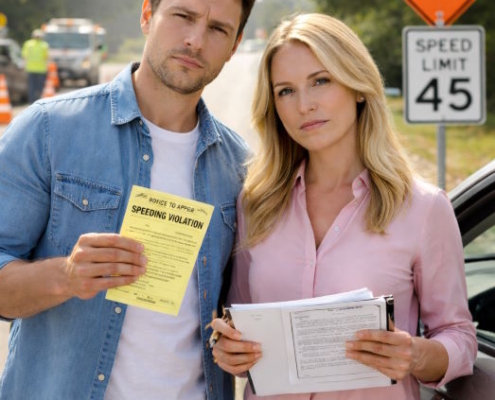
Getting a speeding ticket in a California work zone is a massive headache. It’s not just about the frustration of slowing down for orange cones; it’s about the fact that the state essentially doubles down on the penalties the second you enter a construction area.
If you’ve just been pulled over, you need to understand that this isn’t a “pay it and forget it” situation. Handling it poorly can wreck your driving record and your insurance rates for years. Here is the reality of what you’re facing in 2026 and how you can actually fight back.
In California, Vehicle Code 22362 makes it clear: if workers are present and you’re over the limit, your base fine is likely going to double. What looks like a $35 ticket on paper quickly balloons into hundreds of dollars once the state tacks on “penalty assessments” & court fees.
You aren’t a “victim” of the ticket yet. You’re a defendant. You have options to mitigate the damage.
Trial by Written Declaration is often the smartest first move. You fight the ticket through the mail without ever setting foot in a courtroom. If the officer doesn’t bother to fill out their side of the paperwork, you win by default.
Just because there were cones doesn’t mean it was a legal work zone. If there were no signs posted or no workers present at the time, your lawyer can argue that the doubled fines shouldn’t apply.
Ignoring a traffic ticket for speeding in a work zone in California is a disaster. The DMV will eventually suspend your license, and the court will add a “Civil Assessment” fee that can push your total debt into the thousands.
A work zone ticket is a high-stakes version of a standard speeding fine. Between the doubled costs and the impact on your insurance, it’s almost always worth fighting or at least negotiating.
Understanding California’s Work Zone Speed Limit Laws
In California, speeding through a construction zone isn’t just a regular traffic infraction. It’s a high-stakes legal mess. The state views work zones as high-risk areas, and the penalties are designed to be painful enough to force drivers to pay attention.
If you’ve been tagged for speeding near those orange cones, here is what you are actually up against in 2026:
- The Double Fine
The most immediate sting of a work zone ticket is the cost. Under California law, fines are often doubled if the violation happens in a designated construction area. Once you add in the court “assessments” and state fees, a ticket that started at $35 can easily clear $500 or $600.
- The Hidden Cost
The check you write to the court is only the beginning.
- A traffic ticket for speeding in a work zone adds a point to your DMV record. If you’re caught going more than 100 mph or have multiple offenses, it gets much worse.
- In 2026, insurance companies are aggressive. One work zone point can stay on your record for three years, potentially doubling your monthly premiums and stripping away your “Good Driver” discount.
- If your job involves driving, whether you’re a trucker, a delivery driver, or have a company car, that point can be a career-killer. Many employers won’t touch a driver with a work zone violation on their record.
- The Danger of Repeat Offenses
If this isn’t your first time getting caught, the court stops being “reasonable.” Repeat offenders in California face an escalating wall of penalties:
- The DMV can pull your driving privileges entirely if the points stack up.
- You may be ordered to attend intensive (and expensive) driver safety programs.
- Judges have the discretion to order labor or community service for drivers who show a pattern of reckless behavior in work zones.
California doesn’t play around with the safety of roadside workers. Because the stakes are so high for your wallet and your license, simply paying the ticket is often the worst move you can make. It’s almost always better to fight the ticket or at least negotiate for traffic school to keep your record clean.
Steps to Respond to a Speeding Ticket in a Work Zone
The way you react to a traffic ticket for speeding in a work zone, the moment you get it, will basically decide if you have a shot at winning or if you’re just throwing money away. You need to read the room and act fast. Since fighting a ticket requires a decent grasp of the law, it’s a good idea to pick a lawyer’s brain before you do anything. Just be prepared. This isn’t a quick fix & the process can drag on. Understand everything before you respond.
- When you are pulled over
When those lights pop up behind you, pull over. Fast, but safe. Keep it cool and be respectful to the officer. If you’re aggressive, you’re just begging for the maximum penalty. Leniency happens for the polite ones.
Stop the “why me?” routine. Answer the basics. Follow the officer’s commands.
Once they walk away, grab your phone. Note the time, the road conditions, and exactly what just went down. In 2026, California is doubling down on “Prima Facie” violations in work zones—meaning they assume you were unsafe just because of the cones. Document if there were actually workers present or if the signs were blocked. Stick to the facts.
- Auditing the citation
Take a photo of that ticket immediately. Then, look for mistakes. Check the date, the time, & the location. A cop getting the street name wrong or missing a digit on your plate can be your ammunition.
Next step? Look up the code section on the ticket. Most likely, you’ll see VC 22362 if you were in a work zone. You need to know the specific California law you’re accused of breaking. Figure out the real fines. They can hit $500 to $600+ after all the court fees.
- The clock is ticking
Missing a deadline is a disaster. California courts are strictly imposing a $100 Civil Assessment fee (under Penal Code 1214.1). This is for failure to appear. It can jump even higher depending on the county.
Put every date in your calendar. Get your paperwork in early—especially if you want a hearing or a Trial by Written Declaration. This is your best shot at a break because if the officer doesn’t file their paperwork, you win by default.
Beating a Traffic Ticket For Speeding in a Work Zone
In California, Vehicle Code 22362 is basically a “guilt trap.” The state uses it to double your fines the moment you cross into those orange cones. But in 2026, the law isn’t a brick wall—it’s a set of rules that the police often forget to follow.
If you’re staring at a work zone ticket, here is the real-world strategy to dismantle it:
- The “400-Foot” Technicality
Under VC 22362, the doubled fine only applies if very specific signage rules are met.
- Speed limit signs must be placed within exactly 400 feet of each end of the zone.
- The “double fine” is legally void if the signs were 600 feet away or if they were hidden by overgrown shrubs or a parked construction truck. Go back and take photos or use GPS data to prove the sign placement was off. If the signage wasn’t perfect, the “extra” penalty shouldn’t exist.
- The “Prima Facie” Loophole
California uses “prima facie” speed limits in work zones. The speed limit is presumed to be the safe speed. But it’s not an absolute “maximum.”
- You may contend that your speed was “reasonable and sensible,” even though you exceeded the speed limit. Considering the circumstances (dry roads, clear visibility, and zero workers present).
- A judge might concur that the lower limit wasn’t essential if you were driving 45 in a 35 zone at two in the morning on a Sunday when nobody was working.
- “Trial by Written Declaration” (TR-205)
This is an effective way to win without ever seeing a courtroom.
- You fight the ticket entirely by mail. You submit a written defense (Form TR-205); the officer has to submit a written response.
- Officers get paid overtime to show up for an in-person trial, but they get nothing for doing the paperwork for a written trial. A significant percentage of officers simply don’t bother. The ticket is immediately, and your bail is reimbursed if they miss the deadline.
- Check the “Workers Present” Box
Look at your ticket. Did the officer check the box saying “Workers Present”?
- Officers often check this out of habit.
- That option is false if you can demonstrate that the site was inactive or that the personnel had left for the day using your own images or dashcam. Proving this casts doubt on the entire citation.
- The “Speed Trap” Defense
For an officer to use Radar or LIDAR on a road, the city must have a current “Engineering and Traffic Survey” on file (usually updated every 5–10 years).
If the survey is expired or missing, it’s legally considered a “speed trap.” Evidence from a speed trap is inadmissible in California courts. A lawyer can check the city’s records to see if their paperwork is out of date.
The court wants you to just pay the fine because it’s easy revenue. But between the doubled cost and the insurance hike, you can’t afford to be “easy.” By forcing the state to prove the signs were exactly 400 feet away and that the speed was actually “unsafe,” you turn a “guaranteed” conviction into a toss-up.
Also Read: Is Nepotism Illegal in California? What the Law Allows and Prohibits
Going to Court to Contest the Ticket
Fighting a traffic ticket for speeding in a work zone in 2026 isn’t a venting session—it’s a technical challenge. You’re essentially telling the state, “Prove it.” Since California courts are sticklers for the rules, being sloppy with your defense is the fastest way to lose your lunch money. Here’s how you actually handle the process:
- Build an Evidence File
Memory is useless in court. You need stuff the judge can actually look at.
- If a sign was hidden by a tree or some construction equipment, go back and take a picture. Better yet, pull your dashcam footage. It’s hard for a cop to argue with a video showing exactly what you saw.
- If a passenger saw what happened, get them to write it down. Their perspective can throw a wrench in the officer’s version of the story.
- If your GPS or an app like Waze logged your speed, keep that data. It’s a solid way to challenge a radar reading that feels “off.”
- Know the Court’s Script
Courts run on a specific schedule. Don’t show up to the wrong “act” with the wrong script.
- Your first trip to court is the Arraignment. It’s just for saying “Not Guilty.” Save the photos and the big defense for the actual Trial.
- You have the right to see what they have on you. Ask for the officer’s notes and the radar calibration logs before the trial starts. If their equipment hasn’t been tested recently, the case could be dead in the water.
- Don’t Mess Up the Paperwork
- That “Notice to Appear” date is set in stone. Miss it, and you’re looking at massive late fees or a suspended license.
- You can actually fight this without leaving your house, using a “Trial by Written Declaration.” If you lose that, you still get a second chance with an in-person trial later.
- Talk Like a Professional
- Use “Your Honor.” When you question the officer, stick to “yes or no” facts. Did they check the signs? Was the radar tested?
- Don’t complain that the law is “unfair.” No judge cares. Instead, point out where the officer made a mistake or where the state failed to follow the legal procedure.
Points recorded for speeding in a construction zone
Vehicle Code 22362 violators will have one point deducted from their DMV driving record.
A driver’s insurance company is notified of any points that are recorded on their record. Rates for driver’s insurance usually rise as a result of the number of years.
In California, the DMV has the authority to designate an individual as a negligent operator if they accrue a specific number of points over the course of one, two, or three years. The DMV has the authority to suspend or even cancel that person’s driving privileges if this is done. A State DMV hearing is necessary for either action.
Impact of a VC 22362 infraction on a claim for personal injury
A driver who speeds in a construction zone in California and causes an accident is likely to be found liable in a personal injury lawsuit.
“Negligence” is defined as failing to take reasonable precautions to keep oneself or others safe. When it comes to auto accidents, the careless driver is at fault. The careless motorist can also be responsible for any damages.
It might be challenging to establish negligence for a personal injury case. A driver who breaks a law is deemed “negligent per se” in California.
A legal doctrine known as “per se” negligence presumes negligence when a defendant violates a statute or ordinance.
A driver could be considered negligent in and of itself because speeding in a work zone would violate VC 22362.
Additionally, be aware that a driver is theoretically in violation of California’s basic speeding law if he violates Vehicle Code 22362 VC. Additionally, California courts have decided that breaking the basic speeding law constitutes negligence.
Please be aware, however, that a driver might still be entitled to compensation for any harm he sustains even if he is legally or per se negligent. California’s comparative fault laws are responsible for this.
Is a Lawyer Worth It?
When contesting a speeding penalty in a construction zone, drivers have the option to represent themselves. However, it is advised that anyone who gets one of these tickets contact a knowledgeable attorney to represent them.
It’s a lot of work. A traffic attorney is basically a shortcut. They know the technicalities—like an expired traffic survey—that can get a ticket tossed before you even open your mouth. They deal with the paperwork and the cross-examination, so you don’t have to sweat the small stuff.
Hiring a lawyer is beneficial for three major reasons. These are:
- You get a better seat at the table
Prosecutors deal with hundreds of cases a day and usually have a “script” for people who show up alone. When you have a lawyer, they can talk to the prosecutor as peers. Because the lawyer knows exactly which technicalities could sink the case, they have the leverage to walk away with a deal you probably wouldn’t get on your own.
- They know how to make things disappear
A good lawyer isn’t just there to argue; they are looking for the “exit” button. They know how to spot a sloppy police report or an expired radar calibration that can get the whole ticket tossed. If they can’t get it dismissed, they are experts at negotiating a “charge reduction”—turning a point-carrying speeding ticket into a non-moving violation that won’t mess with your insurance.
- You don’t even have to show up
In California, for most traffic infractions, you don’t actually have to spend half your day sitting on a hard court bench. Under Penal Code 977, your attorney can go to court on your behalf. You stay at work or at home. They handle the judge and the paperwork. It saves you the stress (and the gas money) of dealing with the courthouse yourself.