Introduction
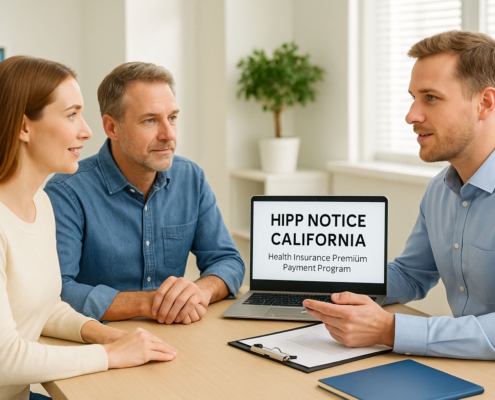
The Health Insurance Premium Payment (HIPP) Program is a Medi-Cal cost-saving program run by the Department of Health Care Services (DHCS). The idea behind it is simple. Sometimes, it is cheaper for the State to pay someone’s private health insurance premium than to cover their full medical expenses under Medi-Cal. When this happens, DHCS may step in and pay the insurance premium directly. Receiving a HIPP Notice in California means the State is evaluating whether paying private insurance premiums is more cost-effective.
It sounds unusual at first, but it helps the State reduce costs while allowing Medi-Cal members to keep their existing health coverage. The decision to pay the premium is based on cost-effectiveness. If paying the health insurance premium costs less than what Medi-Cal would spend on treatment, the State may choose the cheaper option, the premium. Understanding what triggers a HIPP Notice in California helps both clients and Eligibility Workers.
Who Qualifies for HIPP?
Not everyone on Medi-Cal qualifies. DHCS follows a strict set of rules. A person must meet all of the following conditions:
- Active on Fee-for-Service Medi-Cal
Only individuals on the Fee-for-Service (FFS) side of Medi-Cal are eligible. If someone is already enrolled in a Medi-Cal Managed Care Plan, they do not qualify.
- Not Eligible for Medicare
HIPP does not cover individuals who are already eligible for Medicare.
- The Premium Cannot Be a Court-Ordered Responsibility
If a court has ordered an absent parent to pay for the insurance, HIPP cannot take over those payments.
- The Person Has a High-Cost Medical Condition
This is a key requirement. HIPP only applies when the recipient or a family member on the policy has a medical condition that typically generates high healthcare costs.
- Medi-Cal Savings Must Exceed the Premium Cost
The State runs a cost comparison. If Medi-Cal spent more money covering the person’s treatment than the cost of the private insurance premium, then the case may qualify.
- The Person Must Have Access to Health Insurance
Acceptable forms include:
- An active health insurance policy
- COBRA continuation coverage
- A conversion policy
- Insurance is available through an employer or another source
A HIPP application can still be submitted if insurance has recently lapsed (within the last 60 days). If the case looks cost-effective, DHCS may reach out to the insurance company to see if coverage can be reinstated. The first step is often triggered when someone receives a HIPP Notice in California.
Special Notes on COBRA
COBRA applicants usually have enough time for DHCS to review the case and make the first payment before deadlines. However, timeliness matters.
A “timely” HIPP application means:
COBRA continuation: Within 30 days of termination
Conversion policy: Within 20 days of termination
The policy also must cover the specific high-cost condition. It must not be issued through the California Major Risk Medical Insurance Board. And there must be no past-due payments owed on the policy.
HIPP eligibility begins the month DHCS receives the application.
What the Eligibility Worker (EW) Needs to Do
The first step is the HIPP Application Form – Fillable, which acts as a direct referral to the HIPP Program. Either the Medi-Cal recipient or the EW can complete it online.
1. Information Required on the Application
The online form asks for:
- Medi-Cal BIC/CIN number
- Full name of the client
- Current address
- Phone number
- A valid email address (if the EW completes the application, the EW’s email can be used)
- Medicare status
- Whether coverage is COBRA
- COBRA start and end dates
- How premiums are currently paid
- Insurance company name and phone number
- Policyholder name and address
- Policy and group numbers
- Current premium amount
- Number of individuals covered under the policy
The EW must pick the correct method of premium payment. If “Other” is chosen, a brief explanation is required.
2. Documents That Must Be Uploaded
The application is not complete without uploading the required documents.
- At least 1 year of Explanation of Benefits for medical & pharmacy services
- An insurance rate sheet or a current premium statement
- Payee Data Record
- HIPP program forms:
- a) DHCS 9114 (if applicable)
- b) DHCS 9119
- c) DHCS 9120
- d) DHCS 9121
Submitting applications quickly is essential. Timing affects whether the insurance carrier must accept reinstatement or continuation. This is important when the case started because the client or EW received a HIPP Notice in California requiring action.
DHCS makes the final decision. Approval is not always guaranteed.
What DHCS Does After Receiving the Application
Once DHCS gets the application, the HIPP Program team takes over. They:
- Review and process the application
- Decide whether the case is cost-effective
- Begin paying premiums if approved (starting from the month the application was received)
- Update MEDS with the correct Other Health Coverage (OHC) code
- Reevaluate the case every year
Both the EW and the client are notified if anything changes, such as premium adjustments or program discontinuation.
1. If HIPP Is Approved
Once DHCS approves the case:
- The EW must remove the private insurance premium deduction in CalSAWS (a 10-day notice may be needed if this increases the share of cost).
- The EW must check whether the OHC information is entered correctly in both CalSAWS and MEDS.
Appeals for HIPP denials are not handled by the California Department of Social Services.
To verify HIPP enrollment in MEDS, check the HIAR screen. The “Source” field will display “HIPP” if the person is enrolled.
2. If the Client Voluntarily Drops Their Health Coverage
Sometimes a client decides to stop paying for their private insurance, even when the State is covering the cost. If the EW learns that the client voluntarily ended coverage, they must immediately call DHCS at 1-866-298-8443.
After DHCS confirms disenrollment, the EW must:
- Discontinue the Medi-Cal eligibility of the person who voluntarily dropped the State-paid coverage
- Issue a 10-day Notice of Action
- Treat that person as an ineligible member of the Medi-Cal Family Budget Unit (MFBU)
This discontinuance does not affect other family members. Their Medi-Cal benefits must continue, as long as they can’t enroll on their own.
Final Thoughts
The HIPP Program is built around a very practical idea. If someone already has health insurance that can cover their high medical costs, it may be cheaper for Medi-Cal to help them keep it rather than cover everything directly. The program helps manage State spending, and it helps families maintain continuity of care. The updates may be sent in the form of a HIPP Notice in California.
Timing, documentation, and cost-effectiveness are central to the decision. Both clients and Eligibility Workers must act fast and submit complete information (when a HIPP Notice in California is issued). DHCS takes it from there, reviewing the case and paying premiums if it makes financial sense.